Play2Learn is a corporate learning platform that transforms training content into gamified experiences. Through challenges, rewards, and personalized pathways, the tool helps companies increase employee engagement and knowledge retention.
INDUSTRY
EdTech
ROLE
Product Designer
Context
The platform was already functioning and serving customers, but faced challenges with scalability and product clarity. The team had explored various gamification mechanics, including RPG elements, a leveling system, item inventory, and branching narratives. I joined the project to restructure the gamification layer and create a more standardized foundation that would allow the product to scale.
Problems
Excess information without priority
The interface presented multiple gamification systems competing for the user's attention. Without visual or functional hierarchy, it was difficult to understand which action was more important or which metric to follow.
Lack of feedback on performance
The user completed activities but did not have a consolidated view of their progress or evolution. There was a lack of feedback showing what was learned, where to improve, and how performance translated into skill development.
Disconnection between content and practical application
The training presented information in a technical and out-of-context manner. The user did not see the relationship between what they were learning and how to apply it at work, reducing interest and retention.
Point-in-time engagement
Users started the training but did not return frequently. There was a lack of a system that encouraged habit creation and kept people engaged over time, not just during the initial access.
Approach
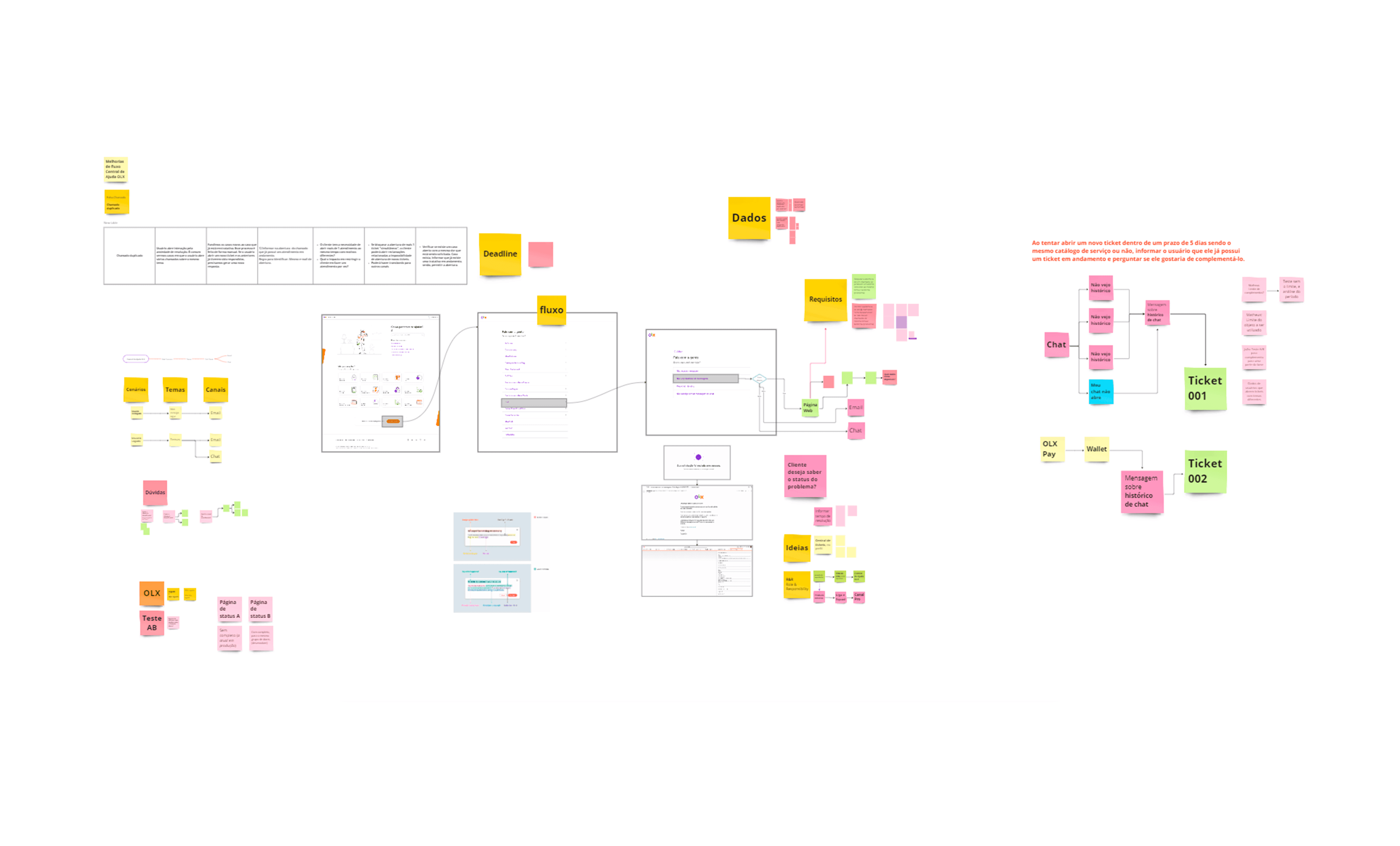
I mapped the complete flow of the platform and identified where the amount of gamified information overloaded the user. I studied platforms like Duolingo and Kahoot to understand patterns that work in learning.
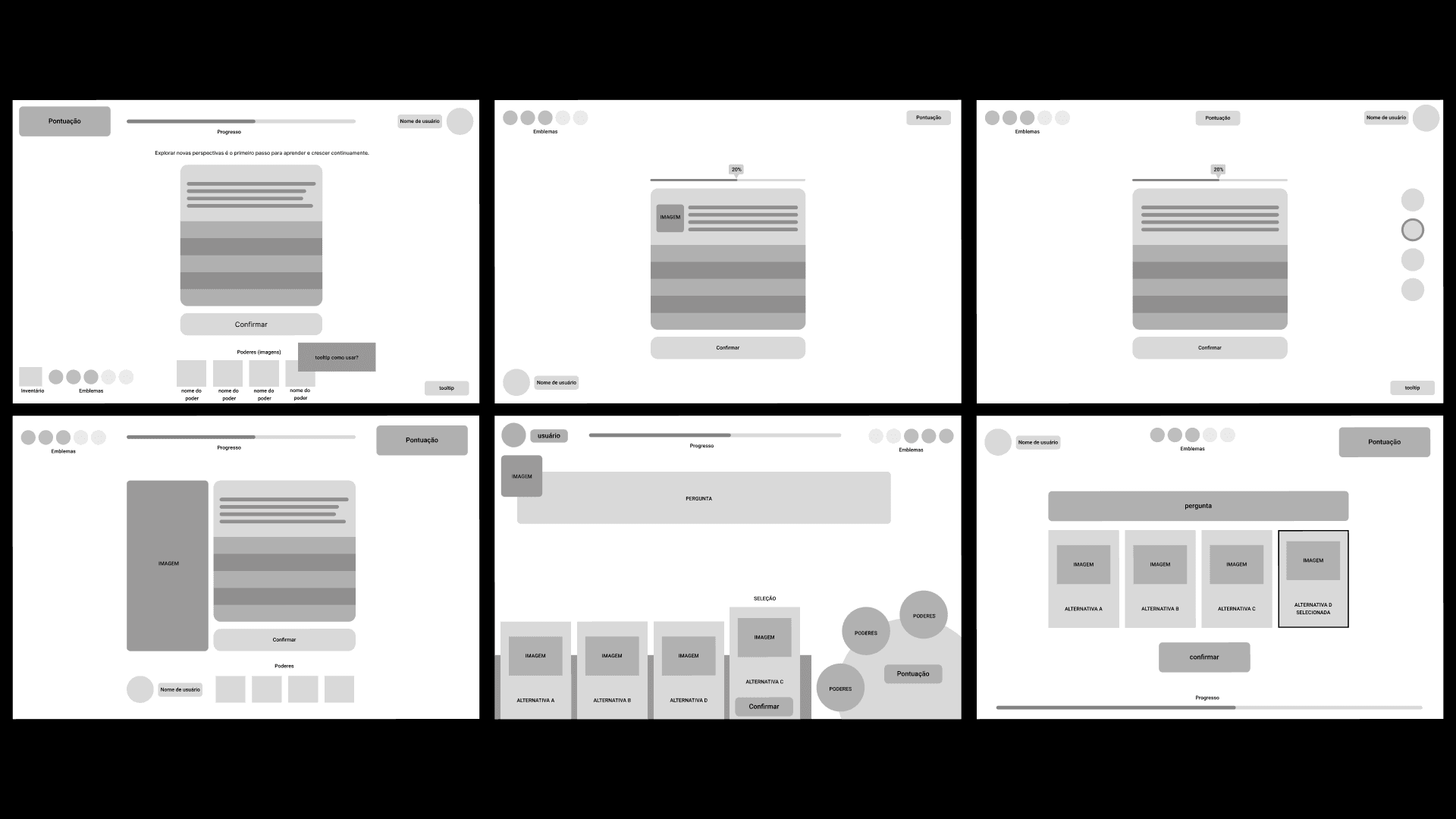
I developed prototypes testing different approaches. I created a card game model, tried more elaborate formats, until I arrived at a quiz with a playful narrative that made more sense for the product and for the user. I worked directly with the product manager and the developer to ensure technical feasibility and alignment with the roadmap.
Applied Solutions
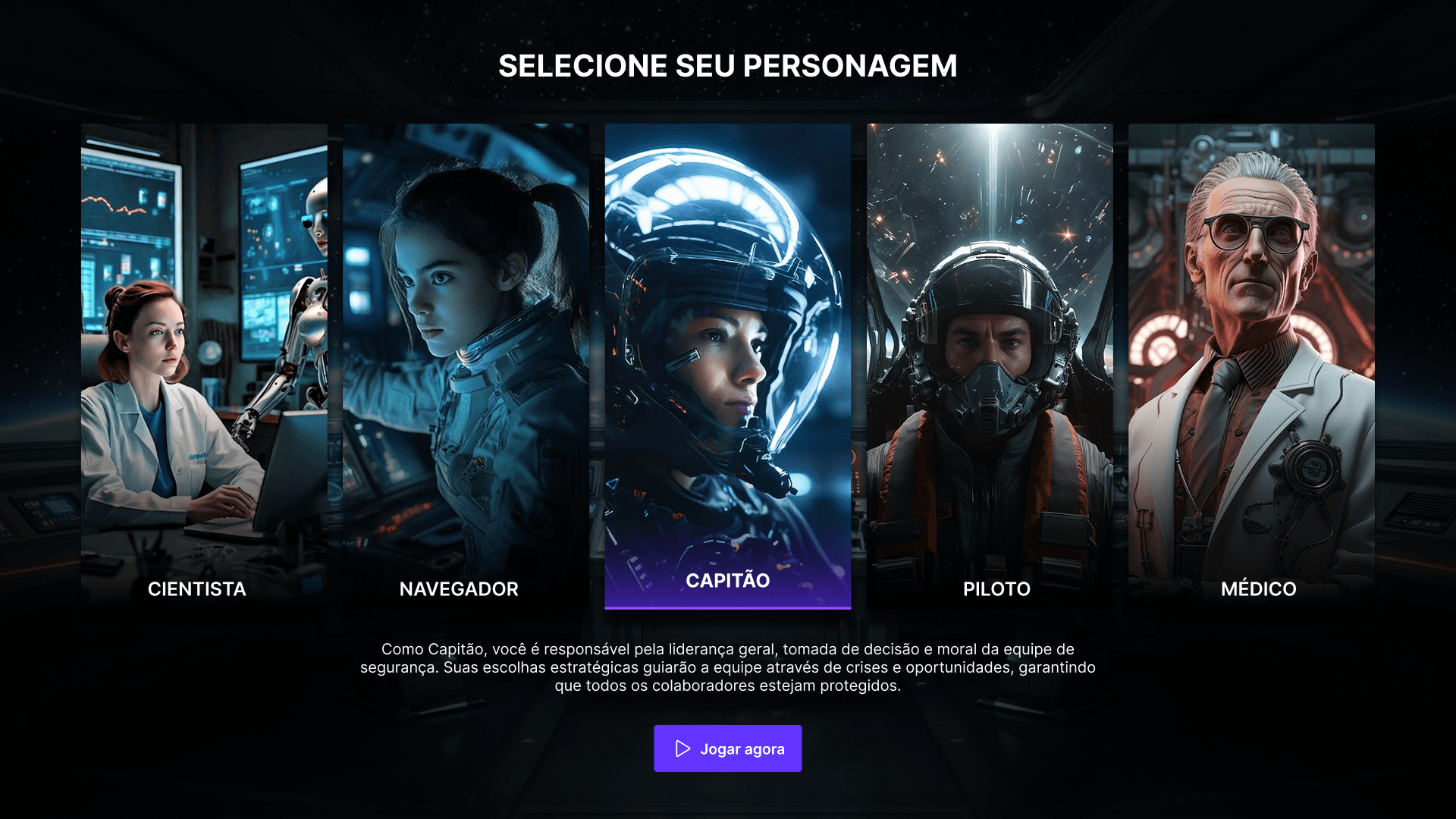
Character Selection by Profile
I implemented a character system where the user chooses at the beginning of the journey. Each character represents a different behavioral profile: analytical, collaborative, competitive, or explorer. The choice indicates how the person prefers to learn and interact with the content. This provided client companies with valuable data about the employees' profiles, helping to personalize pathways and better understand team dynamics.
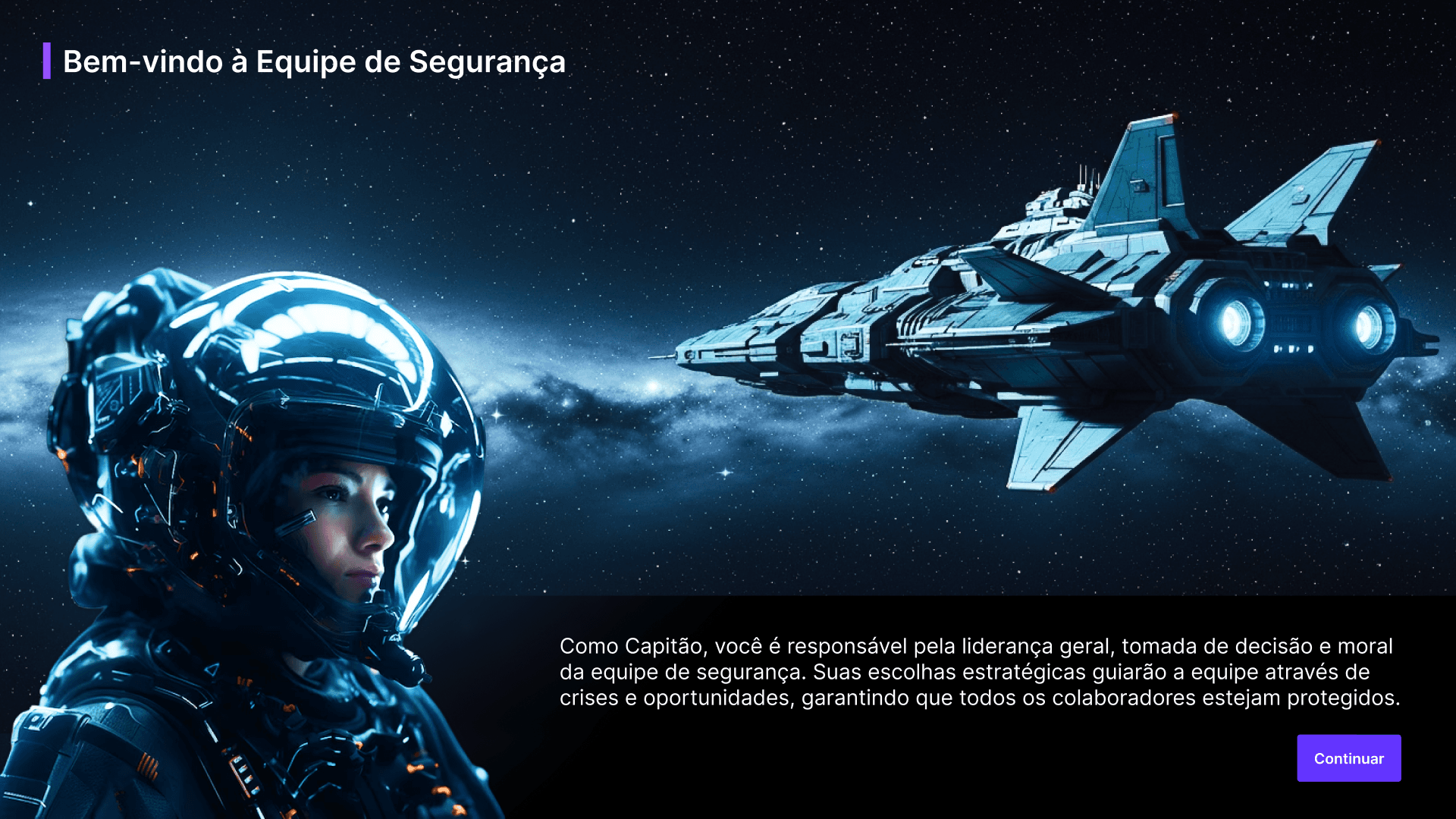
Training with Applied Storytelling
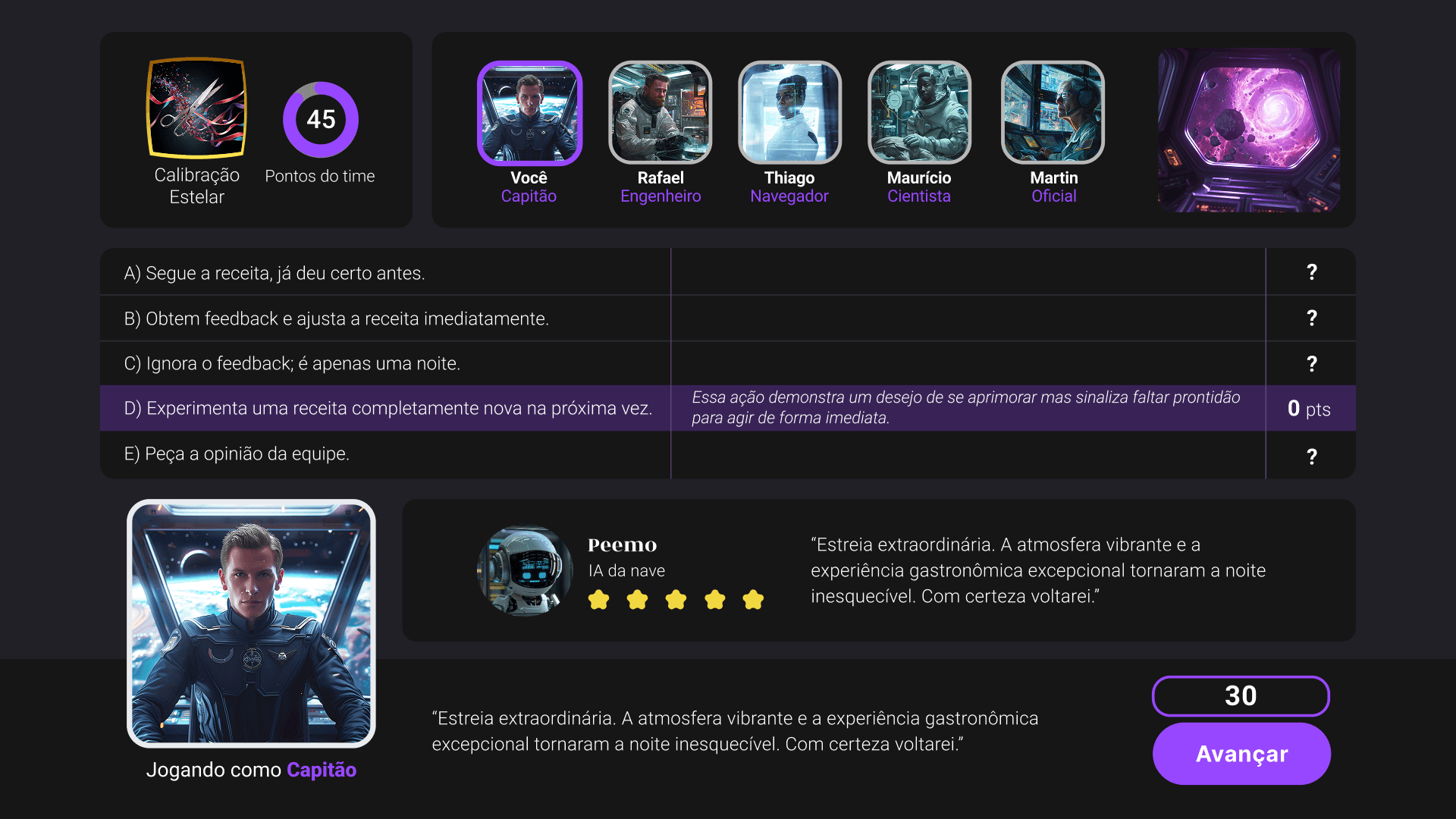
I contextualized the technical content into thematic narratives. In occupational safety, the user becomes part of a space safety team where their protection choices affect the crew's survival, making the learning experience more engaging.
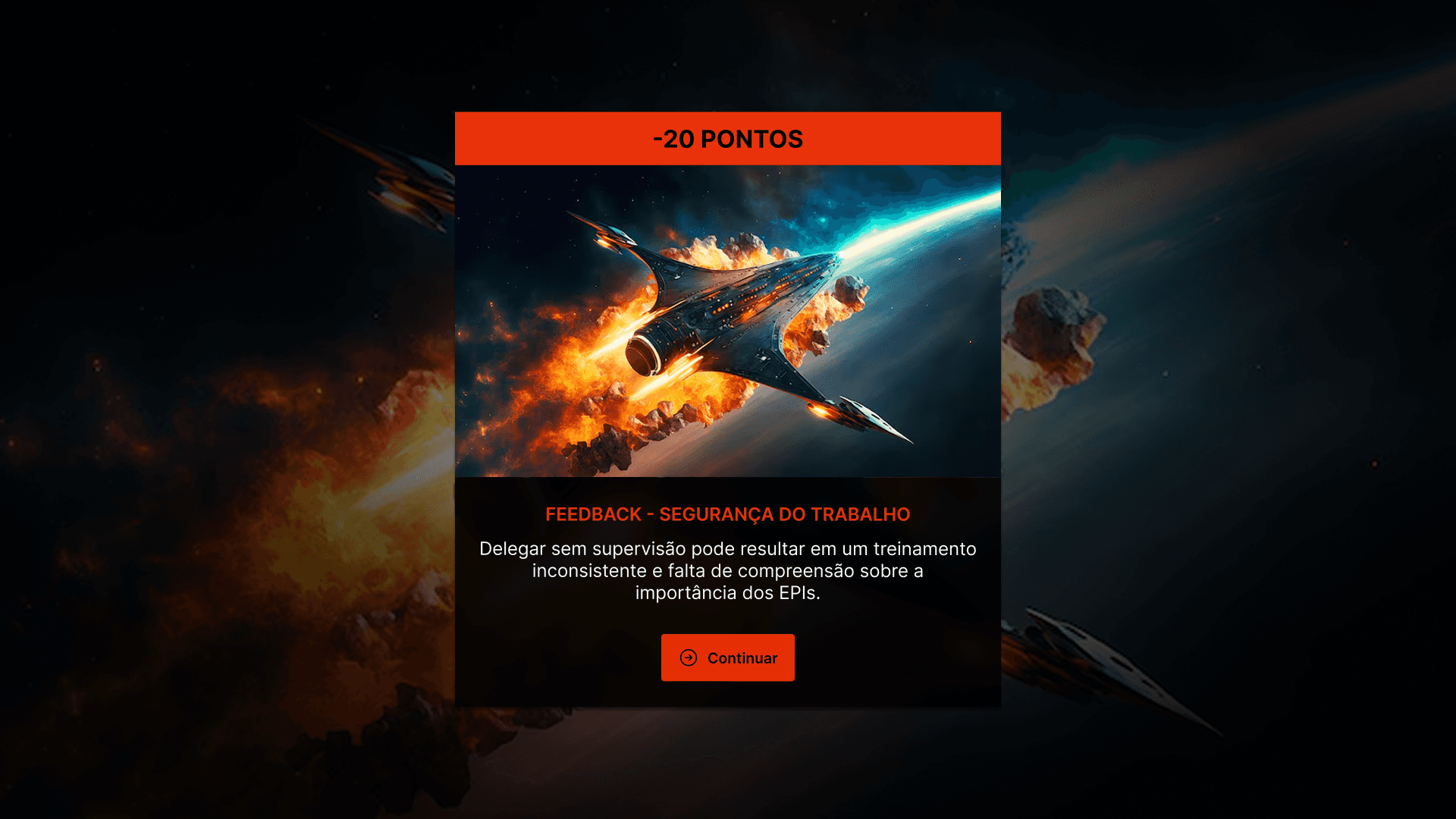
Decision System with Consequences
Each question has a different score based on the user's choice. Better decisions are worth more points, while bad decisions lose points. When the user makes a mistake, the platform immediately explains what the correct answer would have been and why, turning mistakes into learning.
Progressive Rewards System
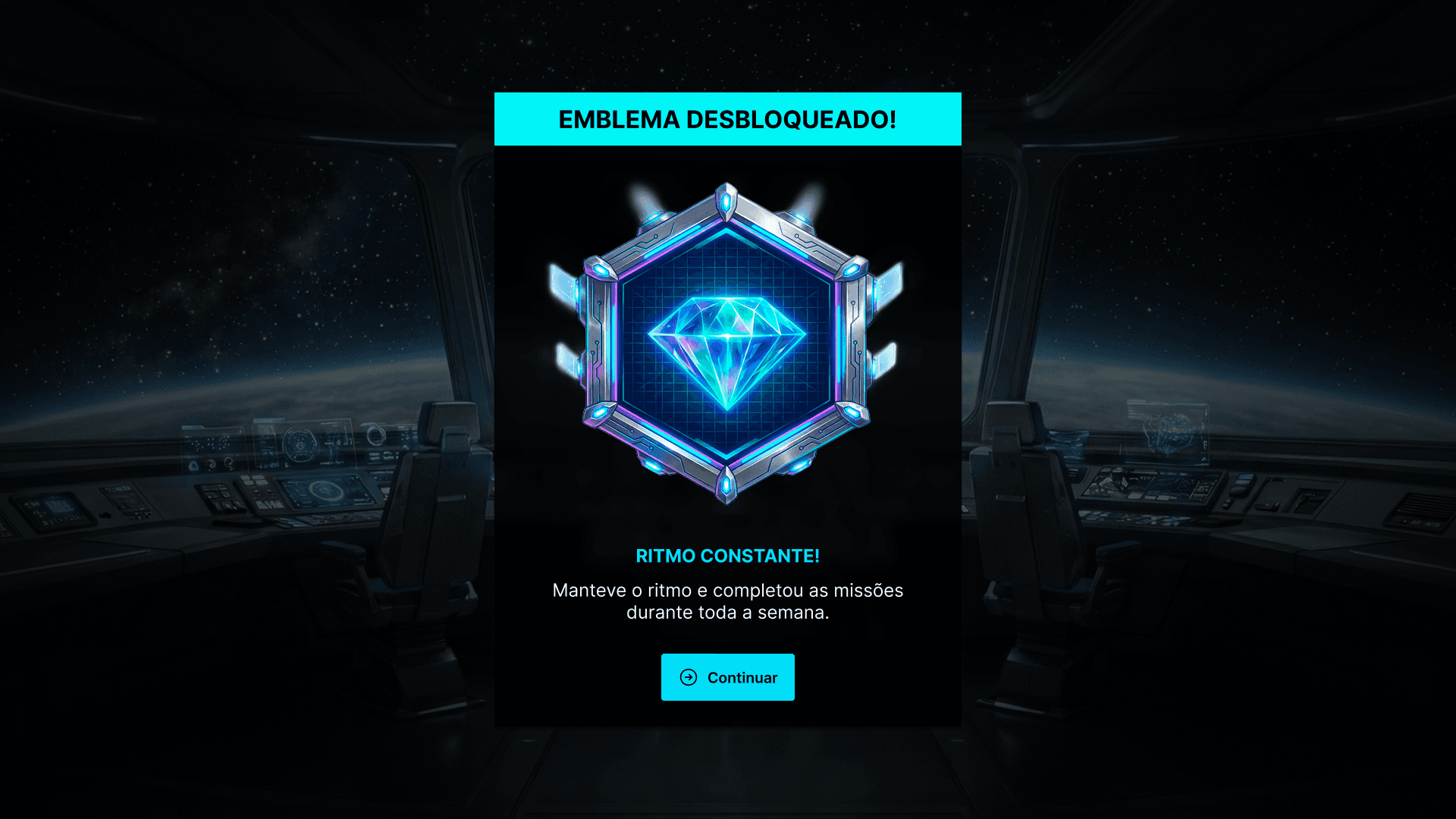
Those who maintain daily activity earn bonuses and unlock special rewards; those who concentrate everything in one day receive less. Badges have become specific achievements tied to behaviors that companies want to encourage.
Complete and Shareable Feedback
Upon completion, the user sees earned badges, skills chart, demonstrated soft skills, strengths, and areas for improvement, along with practical tips based on their performance. The platform also automatically generates a personalized certificate with this information to share on social media.
Concrete Results
43% increase in the training completion rate.
35% growth in the average time spent on the platform.
60% reduction in the implementation time for new clients, from 3 weeks to 2 days.
The company managed to scale its customer base without proportionally increasing the team.
Learnings
I tested different formats until I arrived at a structured quiz with direct feedback. Simplicity worked better than complex systems because users understood what to do without needing an explanation.
The design documentation through flowcharts and wireframes aligned the internal team and accelerated the onboarding of clients. When everyone visualizes how the platform works, implementation becomes faster and with fewer errors.
Working closely with product and development from the beginning avoided wasting time. Validating technical feasibility during the design process prevented interesting but unfeasible solutions from advancing in the project.
Smooth Scroll
This will hide itself!
This will hide itself!
Smooth Scroll
This will hide itself!
This will hide itself!